On-Chain Options Desk: How It Differs From a Traditional OTC Desk
A high-level comparison of off-chain OTC options desks and on-chain options desks: custody, margin, settlement, transparency, and what still remains on trust.

Most traders are used to option trades happening somewhere inside a broker, an exchange, or an OTC desk. A client asks for a quote, accepts the price, signs the trade, receives a statement, and maybe gets a margin call later.
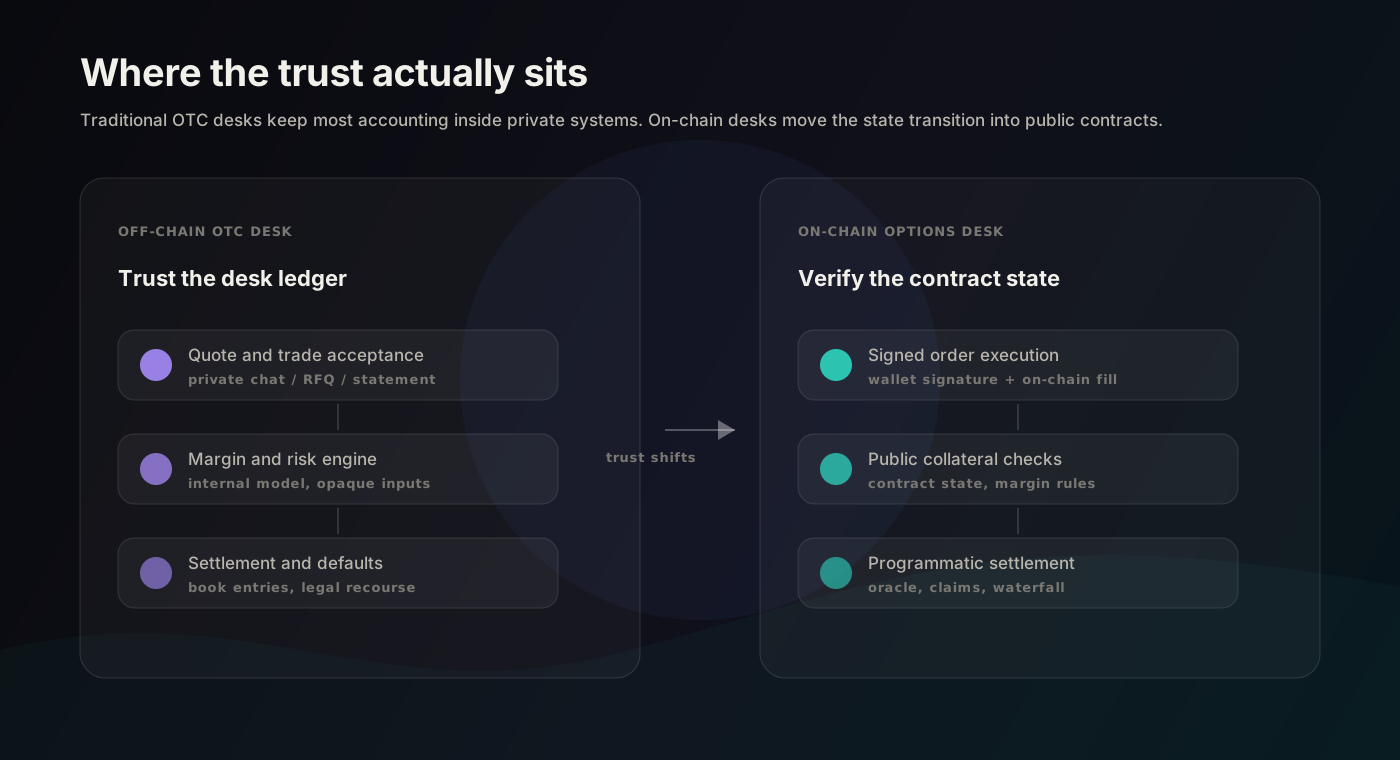
That workflow can be efficient. It can also be opaque. The most important parts of the trade - position accounting, margin, risk, default handling, and settlement - usually live inside the desk’s private systems.
An on-chain options desk is different. The market maker may still quote the trade. The user may still negotiate through an RFQ workflow. But the core rules for positions, collateral, margin, and settlement are enforced by smart contracts.
That does not make the system magically risk-free. It does change what has to be accepted on trust.
The classic off-chain OTC desk
Imagine a traditional options desk.
A client wants to buy or sell an option. The desk or market maker returns a quote. If the client accepts, the desk books the trade internally and starts tracking the position, PnL, margin, risk, and settlement obligations.
From the user’s point of view, the process looks simple:
request quote
accept price
position appears in statement
desk calculates risk and settlement
Behind that statement sits a lot of private infrastructure:
- how the desk calculates portfolio margin;
- how it values complex option combinations;
- how it accounts for collateral;
- when it considers an account undercollateralized;
- how it closes or transfers positions after default;
- how losses are allocated if someone cannot pay.
The user usually cannot fully reproduce those calculations. They trust the desk, the legal agreement, the custodian, the risk team, and the internal accounting stack.
That trust may be reasonable. Large desks have operational processes, credit departments, and legal frameworks for a reason. But the user is still depending on a private ledger.
What changes on-chain
In an on-chain options desk, a meaningful part of that ledger moves into smart contracts.
The user still trades with a market maker. This is not necessarily an anonymous AMM, and it is not “decentralization” as a slogan. The important shift is narrower and more practical: the trade, position update, collateral check, and settlement path can be written into public rules.
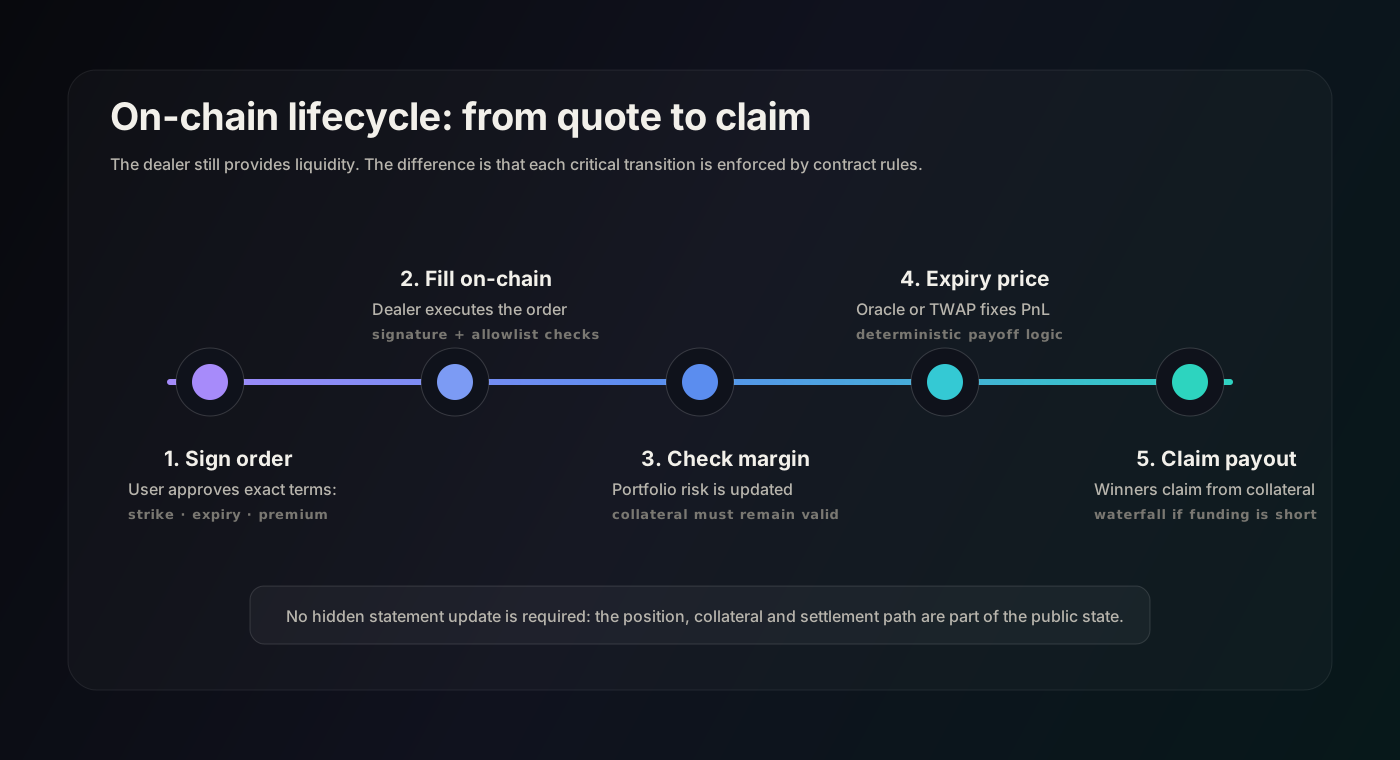
A simplified flow looks like this:
user signs an order
market maker fills it on-chain
contract updates positions
contract checks margin
contract records expiry obligations
contract distributes claims
The rules are not hidden in a backend. They can be audited, simulated, monitored, and challenged against public state.
Example 1: opening a trade
In a traditional desk, a user might buy a BTC call option and later see that position in a statement.
In an on-chain desk, the user signs an order with explicit terms:
Buy 1 BTC CALL
Strike: 60,000
Expiry: 30 Sep
Premium: 1,000 USDC
Dealer: Dealer A
When the market maker fills the order, the smart contract can check whether:
- the order was actually signed by the user;
- the dealer is allowed to fill it;
- the strike and expiry are valid;
- the premium is transferred correctly;
- both sides have enough collateral;
- the resulting portfolio remains inside the margin rules.
If those checks fail, the trade does not settle.
This matters because the execution path is no longer just a message plus a database write. It becomes a state transition that either satisfies the contract or reverts.
Example 2: portfolio margin
Options risk is rarely the sum of isolated legs.
A user may hold a portfolio like:
short CALL 60k
long  CALL 70k
short PUT  45k
long  PUT  40k
Those legs interact. Some positions hedge others. A spread can have much lower risk than two naked options. A portfolio with apparently small premium may still carry severe tail risk.
In an off-chain desk, the user often sees the final margin requirement but not the exact reproducible logic behind it.
In an on-chain model, the margin logic can be public:
if positions hedge each other,
required margin may be lower;

if the portfolio creates large tail risk,
required margin should increase.
The point is not that every margin model becomes simple. Good portfolio margin is complex. The point is that the rule can be formalized and inspected rather than appearing only as a number in a dashboard.
Example 3: settlement at expiry
In a traditional desk, settlement happens inside the desk’s accounting system. If an option expires in the money, the desk calculates the payout and updates balances.
In an on-chain desk, settlement can follow contract logic:
expiry arrives
oracle or TWAP fixes the reference price
PnL is calculated for each account
winners receive claims
losers pay from collateral
if collateral is short, the waterfall applies
The winner does not need to wait for the losing side to manually send funds. The system should already know how much funding exists and how claims are handled if funding is insufficient.
If a dealer is underfunded, that can become visible. If payouts are pro-rata, that can be visible. If a settlement receives a haircut, it is not a hidden manual adjustment: it is an outcome of the rules.
The real difference: risk visibility
The deepest distinction is not “centralized versus decentralized.” It is visibility.
An off-chain desk often operates on:
trust us, the books reconcileAn on-chain desk moves closer to:
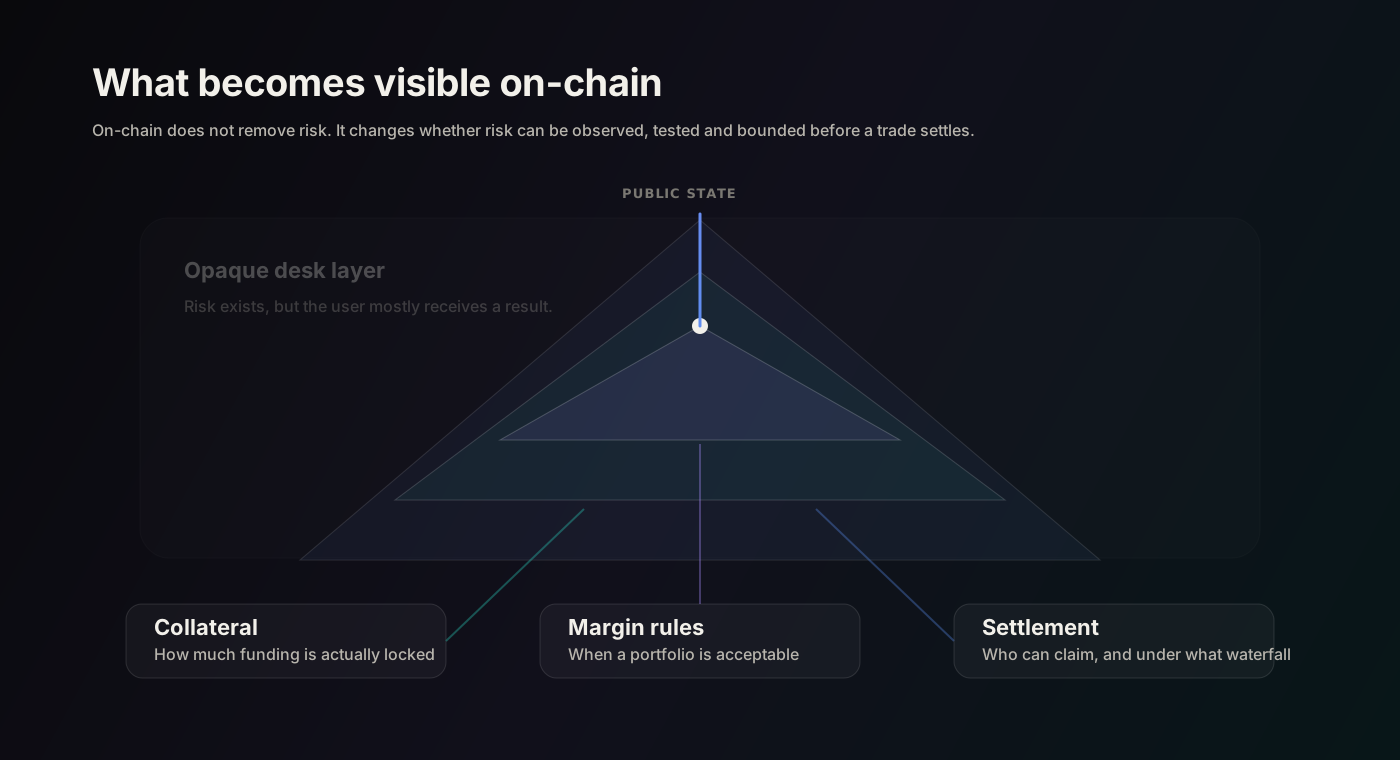
do not trust the statement; verify the state transitionThat does not eliminate risk. It changes where the risk sits and how observable it is.
What still remains on trust
It would be wrong to sell an on-chain desk as fully trustless.
Several risks remain:
- the oracle can publish a bad reference price;
- the smart contract can contain a bug;
- a dealer can be undercapitalized;
- governance can set poor parameters;
- liquidity can be thinner than at a large off-chain desk;
- strict contract rules can be less flexible than a human desk.
The difference is that these risks can be named, measured, and monitored. They can be bounded with collateral rules, oracle design, audits, circuit breakers, and public dashboards.
In other words, the system moves from “trust the operator’s internal process” toward “inspect the mechanics that constrain the operator.”
Why users care
For users, the benefits are practical.
First, there is transparency. A user can inspect positions, collateral, margin requirements, and settlement claims.
Second, there is predictability. The desk cannot silently change how an already-open position is accounted for inside a private database.
Third, there is auditability. External auditors and sophisticated users can review not only the company but also the mechanics of the settlement system.
Fourth, there is composability. On-chain positions, claims, and receipts can potentially connect to analytics, dashboards, vaults, reporting tools, or other DeFi infrastructure.
This is not only a philosophical upgrade. For options, where settlement, collateral, and tail risk matter, being able to verify the ledger is part of the product.
The trade-offs
On-chain desks are harder to build.
Every operation has a gas cost. Complex portfolios require careful optimization. Worst-case transactions must be designed so that they do not become too expensive to execute under stress.
On-chain systems are also less forgiving of manual intervention. An off-chain desk can call a client, negotiate a grace period, or resolve an edge case manually. A smart contract does what the code says.
That is both the benefit and the limitation:
less discretion
less hidden accounting
but also less flexibility
The best on-chain desk design does not pretend that humans disappear. It makes sure that the parts users care about most - collateral, margin, settlement, and claims - are governed by rules that users can verify.
A simple analogy
An off-chain desk is like a bank sending you a statement:
here is your balance
here is your PnL
here is your margin
we calculated it
An on-chain desk is closer to a public calculator attached to a vault:
here are your positions
here is your collateral
here is the formula
here is the result
here is the transaction that changed it
You may still care about the dealer’s capital, reputation, and market quality. But you no longer need to blindly trust the dealer’s private accounting.
Bottom line
An on-chain options desk does not replace the market maker. It makes the market maker more verifiable.
In the traditional OTC market, the main asset is trust in the desk. In an on-chain model, the main asset is transparent rules, verifiable collateral, and public settlement.
Short version:
Off-chain desk:
  private accounting
  high flexibility
  high trust in the operator

On-chain desk:
  public accounting
  strict rules
  verifiable risk and settlement
For users, the promise is not “there is no risk anymore.” The promise is a different market structure: less hidden accounting, fewer manual black boxes, and more verifiable execution.